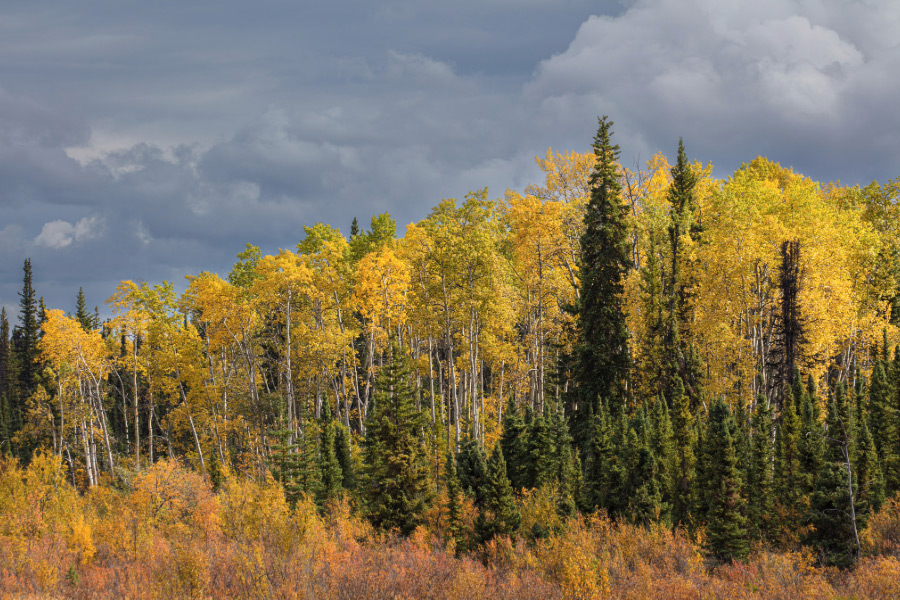
Nordic commercial forestry has long relied on plantations of Scots pine and Norway spruce. In fact, in Finland these two species alone represent more than 80% of the total growing stock in forests available for wood supply. However, the intertwined climate and biodiversity crises are challenging this long-standing model. Interest is growing in increasing the share of native broadleaved species, such as birch, in managed forests.
Mixed stands that include broadleaves are considered less vulnerable to future climatic shifts (e.g. more frequent droughts), extreme weather events (such as storms), and emerging pests and diseases (like bark beetles). They may also provide greater biodiversity benefits. Still, concerns remain about the typically lower economic returns from broadleaved species compared with conifers. What might this mean for the bioeconomy?
Rethinking Nordic forestry through science and modelling
Luke researchers are actively studying this potential transition. In recent work, we discussed management scenarios that would promote broadleaves with a diverse group of stakeholders. Using Motti, a forest growth simulator, we modelled the long-term impacts of these scenarios in a Finnish province. Motti can forecast forest dynamics under different management practices and estimate a broad range of ecosystem services—from timber production to carbon storage.
Our findings show that if forests are managed at current intensity while retaining more broadleaved trees, biodiversity improves, carbon storage remains comparable, and impacts on the bioeconomy are minimal. However, the same biodiversity benefits may not be realised if management intensity increases, as higher intensity tends to reduce broadleaf retention.
Change is urgently needed to respond to today’s environmental challenges. The forests of tomorrow must be shaped now, and diversifying species composition—perhaps with fewer needles and more leaves—may be one powerful tool for securing even greater benefits from our forests in the future.

This article was originally written by Simone Bianchi (Natural Resources Institute Finland, Luke), who contributes to the OptFORESTS project as a member of WP4, “Forest management and genetic diversity.”