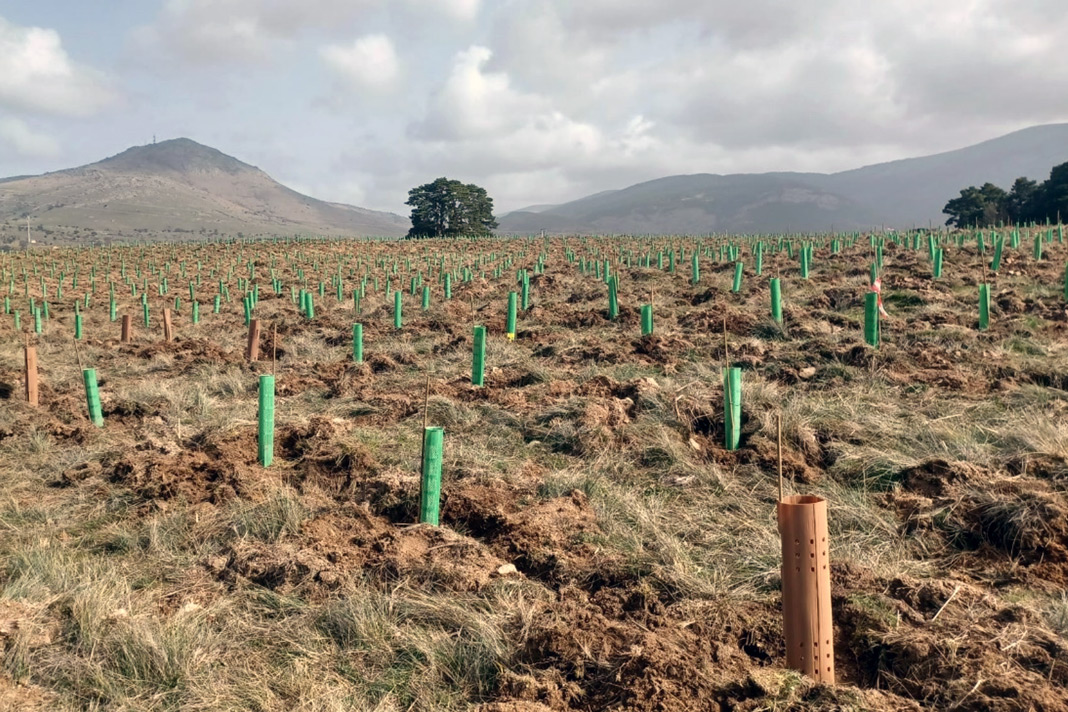
Two new forest genetic trials have been established at the National Centre for Forest Genetic Resources of Valsaín (CNRGF) in Segovia, marking an important milestone for the OptFORESTS project and its work to strengthen the adaptive capacity of European forests in the face of climate change.
As part of the project's WP3 activities, the trials will contribute to a European network of experimental sites designed to assess the performance, resilience, and adaptive potential of different forest species and provenances under changing environmental conditions.
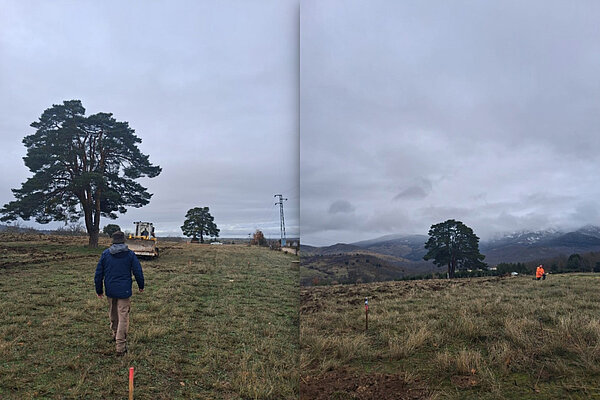
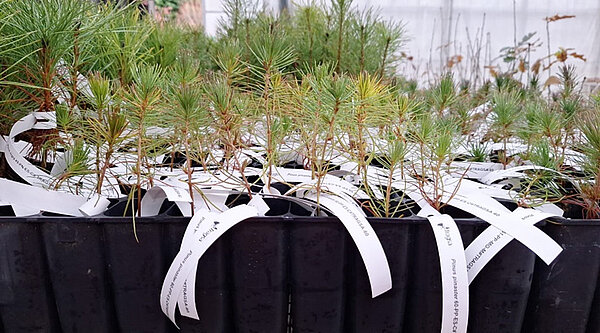
Completed during the first months of 2026, the planting is the result of extensive preparatory work, including seed collection and exchange, nursery production of planting material, site selection, land preparation, and the development of long-term monitoring protocols.
Located in one of Spain's most important centres for the conservation and improvement of forest genetic resources, the site hosts two complementary common gardens. The first, a generic trial, brings together eight provenances from five forest species, allowing researchers to compare their performance under identical conditions and identify forest reproductive material with high adaptive potential. The second, a "luxury" trial, focuses on interactions between species and provenances, offering valuable insights into competition, growth, phenology, and tree architecture.
Together, the two trials cover more than three hectares and include over 5,000 planted trees, creating a unique living laboratory for forest genetics research. Over the coming years, researchers will monitor survival, growth, and adaptive traits to better understand how forest genetic diversity can support resilient forests and sustainable forest management.
The trials have been established through collaboration between INIA-CSIC, TRAGSA, and Spain's Ministry for the Ecological Transition and the Demographic Challenge (MITECO), underlining the importance of cooperation between research and management institutions in addressing the challenges facing European forests.
By generating knowledge on how forest reproductive material adapts to future climatic conditions, the trials will support the objectives of OptFORESTS, the European Green Deal, and wider efforts to conserve and sustainably use forest genetic resources across Europe.