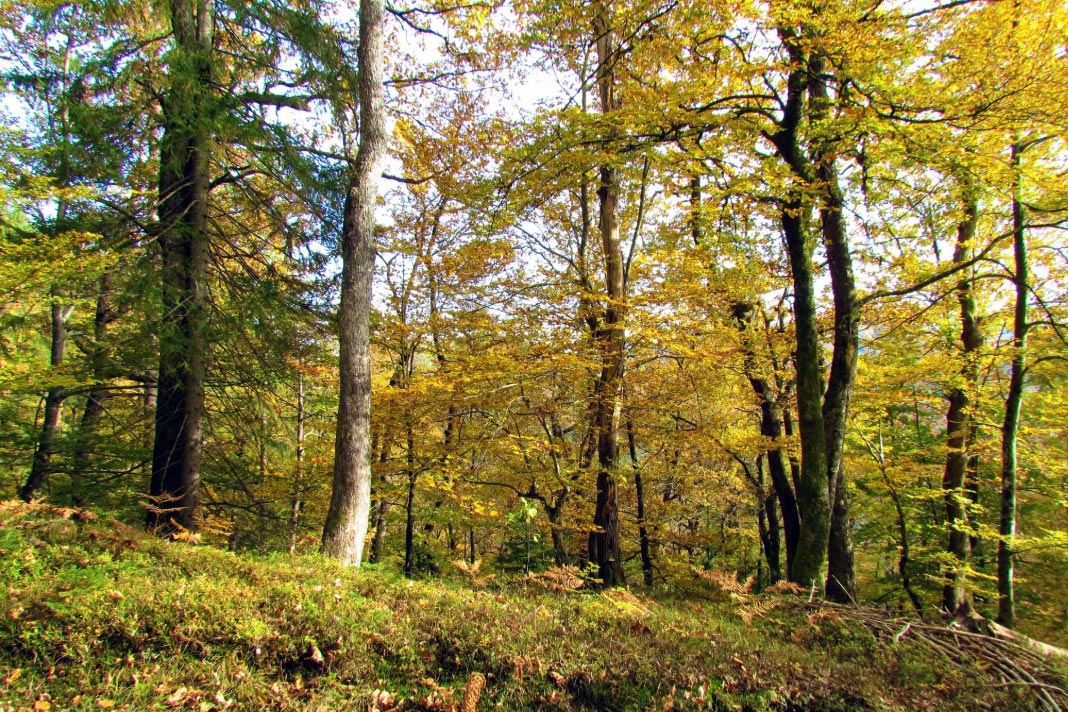
Combining genomic data with tree-ring records from common gardens planted across Europe in the 1990s, researchers compared sessile oak and European beech. The results reveal a striking contrast: sessile oak shows a strong capacity to adapt, through both genetic adaptation and flexible responses to drought and temperature, while European beech shows much weaker signals. This suggests oak may be better equipped to cope with, and even expand under, future conditions, raising concerns about the resilience of beech in Europe's lowland forests.
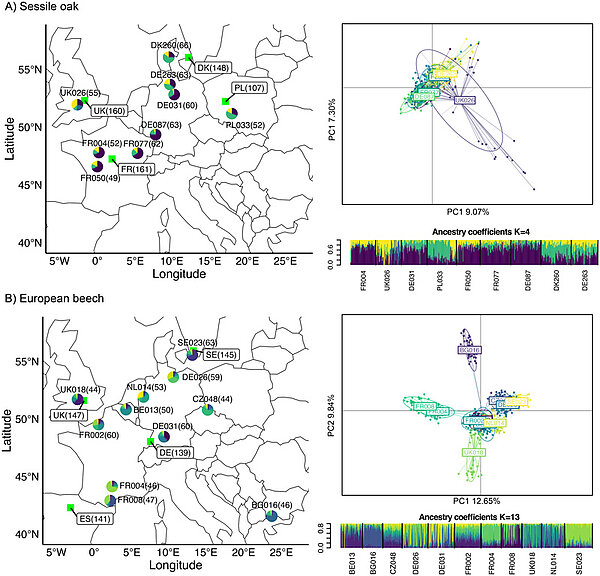
The findings emphasise why conserving genetic diversity, particularly in vulnerable populations, matters for climate-ready forests. They also reinforce the value of common garden trials and forest genetic resources, the very approach OptFORESTS is advancing through its own European network of experimental sites, to understand how species and provenances can adapt to future conditions.
Read the full paper: Pålsson, A., Martínez-Sancho, E., Graf, R., Fonti, P., Vitasse, Y., & Rellstab, C. (2026). Contrasting genomic signatures of climate adaptation and adaptive plasticity across the distribution ranges of sessile oak and European beech. Molecular Ecology. https://doi.org/10.1111/mec.70394